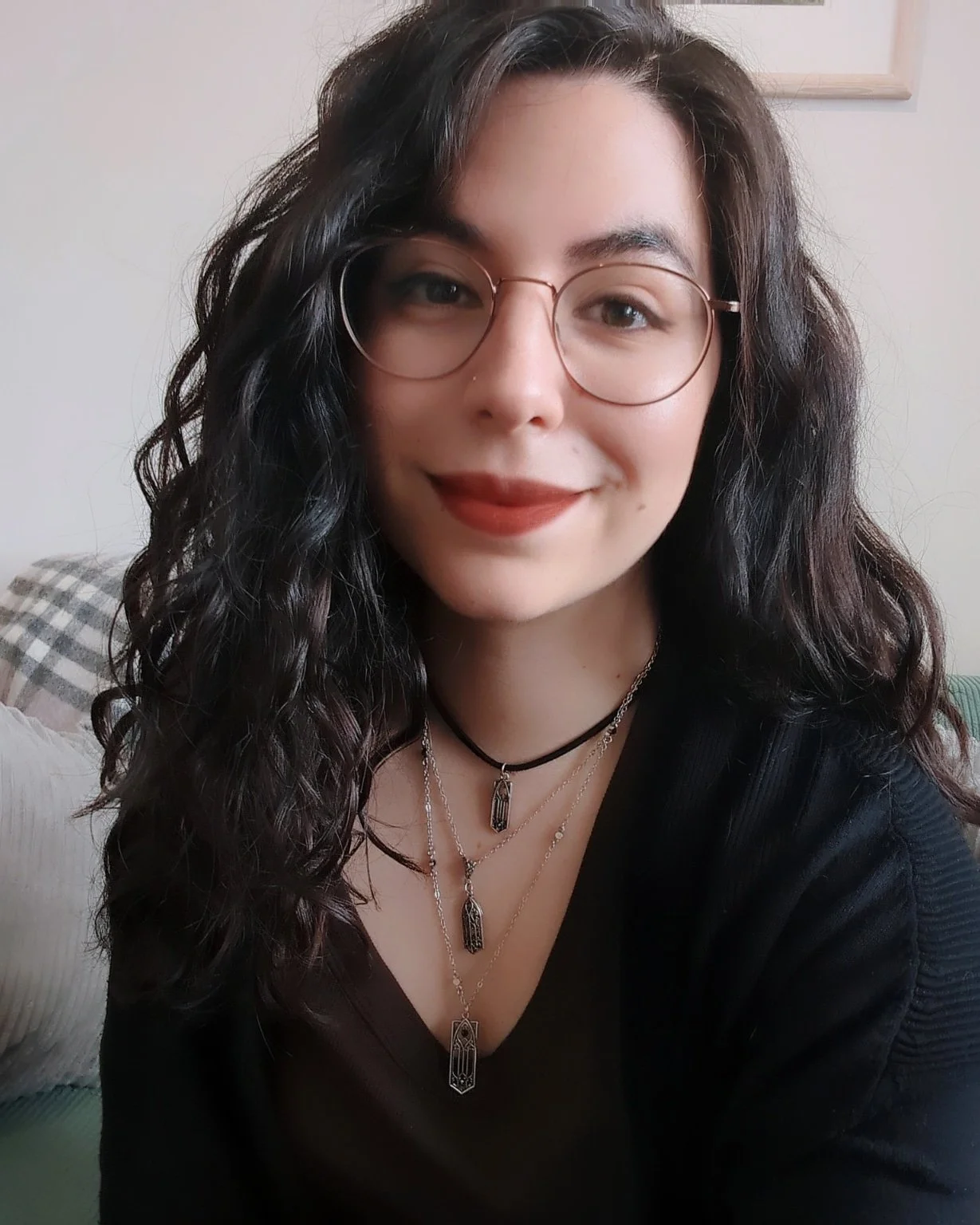
About Maritxu
Hi, I'm Maritxu (pronounced Mah-ree-choo).
I'm a queer, Latina, AuDHD psychotherapist and clinical supervisor, registered with BACP and COSRT. I work fully online with adults across the UK and internationally, in English and Spanish, and occasionally in what I like to call "bye-lingual" because humour and humanity matter in this work.
How I got here
I grew up outside my country of origin (Chile) and moved around a lot. I bring lived understanding of migration, cross-cultural identity, and the particular experience of navigating multiple worlds at once. That tends to resonate with migrants, people in multicultural relationships, and those living between cultures, languages, or identities.
I came to my own neurodivergence later in life. Not through a neat, clear process, but through the messy, disorienting, ultimately liberating realisation that the reason everything felt harder than it seemed to for others was that my brain works differently. That experience shapes everything about how I practise. I don't study neurodivergence from the outside. I live it too.
Training and experience
I've been practising as a psychotherapist for over a decade now. My work is grounded in a pluralistic, anti-oppressive, and neuroaffirming approach, built around the understanding that you are the expert on your own life. My role is not to interpret you from the outside, but to support your agency and help you connect to what matters most: to yourself, and where relevant, to the people and communities that sustain you.
I regularly engage in supervision and continued professional development to ensure my work remains ethical, supportive, and effective.
Education and training:
Postgraduate Diploma (Level 7) in Clinical Supervision, Contemporary Institute of Clinical Sexology (CICS), 2024–2025
Postgraduate Diploma (Level 7) in Sex and Relationship Therapy, Contemporary Institute of Clinical Sexology (CICS), 2022–2024
Postgraduate Diploma in Pluralistic Counselling and Psychotherapy, Abertay University, 2016–2018
Postgraduate Certificate in Counselling Skills, Abertay University, 2015–2016
MSc in Health Psychology, University of Aberdeen, 2014–2015
MA in Psychology, University of Aberdeen, 2010–2014
Registered Member, British Association for Counselling and Psychotherapy (BACP)
Registered Member, College of Sexual and Relationship Therapists (COSRT)

How I work
My approach is pluralistic, which means I draw on a range of therapeutic models rather than applying a single fixed framework.
What that looks like in practice is therapy that is genuinely shaped around you rather than the other way around. I don't arrive with a protocol to fit you into. I arrive with curiosity and a toolbox, and we build something that fits what you're carrying.
I work from the neurodiversity paradigm and the social model of disability. This is non-negotiable in my practice. Difference is not pathology. Many of the struggles people labelled as disorders actually stem from living in a world that wasn't built for them, not from something broken inside them. My job is to help you tell the difference.
I work relationally, which means the relationship between us matters and is a key part of the work that we do together. I am not a blank screen therapist.
I bring warmth, directness, and genuine curiosity. I will not sit there staring blankly at you or parroting back word by word what you bring to our sessions.
When working with specific experiences like OCD, I do draw on evidence-based approaches including Exposure and Response Prevention (ERP), Acceptance and Commitment Therapy (ACT), and Inference based CBT (I-CBT). I adapt them for neurodivergent clients because standard CBT doesn't tend to work for us. The goal isn't to force compliance with a protocol that ignores how divergent brains actually process threat, rituals, and change. The goal is to find what helps you feel more steady without asking you to ignore yourself and your needs.
I have extensive experience working with
Neurodivergent adults navigating late diagnosis, self-realisation, burnout, masking, and the process of understanding themselves in a new light.
People living with invisible chronic illness and pain, including ME/CFS, fibromyalgia, dysautonomia, and conditions like POTS that are frequently dismissed, misdiagnosed, or misunderstood by the very systems meant to support them.
Anxiety in its many forms, including the chronic, high-masking kind that looks fine from the outside and isn't. The spirals, the rituals, the avoidance, the constant hum of alertness that won't switch off.
LGBTQIA+ people across the full spectrum of gender, sexuality, and relationship style, including those still in the process of exploring.
Complex trauma with a trauma-informed, stabilising approach that does not rush. Rebuilding safety takes time, and rushing it risks repeating the harm.
Survivors of domestic abuse and intimate partner violence, including coercive control, and the longer process of rebuilding safety and self-trust after leaving.
Sexual health and identity, including desire, intimacy, and concerns that many people find hard to raise elsewhere.
Migrants and people navigating multiple cultural identities, including those in cross-cultural relationships or living between languages.
Therapists, particularly those who are neurodivergent, working with marginalised communities, or developing specialist practice.
If you do not see your experience listed here, that does not mean you are not welcome. It means the list is not exhaustive. You belong here.
For therapists
For therapists seeking clinical supervision, I offer a space that honours your humanity as much as your professional role. Thoughtful, collaborative, and grounded in care, particularly for those working at the edges: relational harm, marginalised communities, neurodivergence, sexuality, and identity.
Especially welcoming of neurodivergent practitioners and those navigating complex or underserved caseloads.
Therapy works best as a collaboration. That is what this is.
If you’re considering therapy, you don’t need to be certain or ready to commit long-term.
A free consultation offers a chance to ask questions, get a feel for how I work, and see whether it feels like the right fit for you.
Just reach out when you are ready.